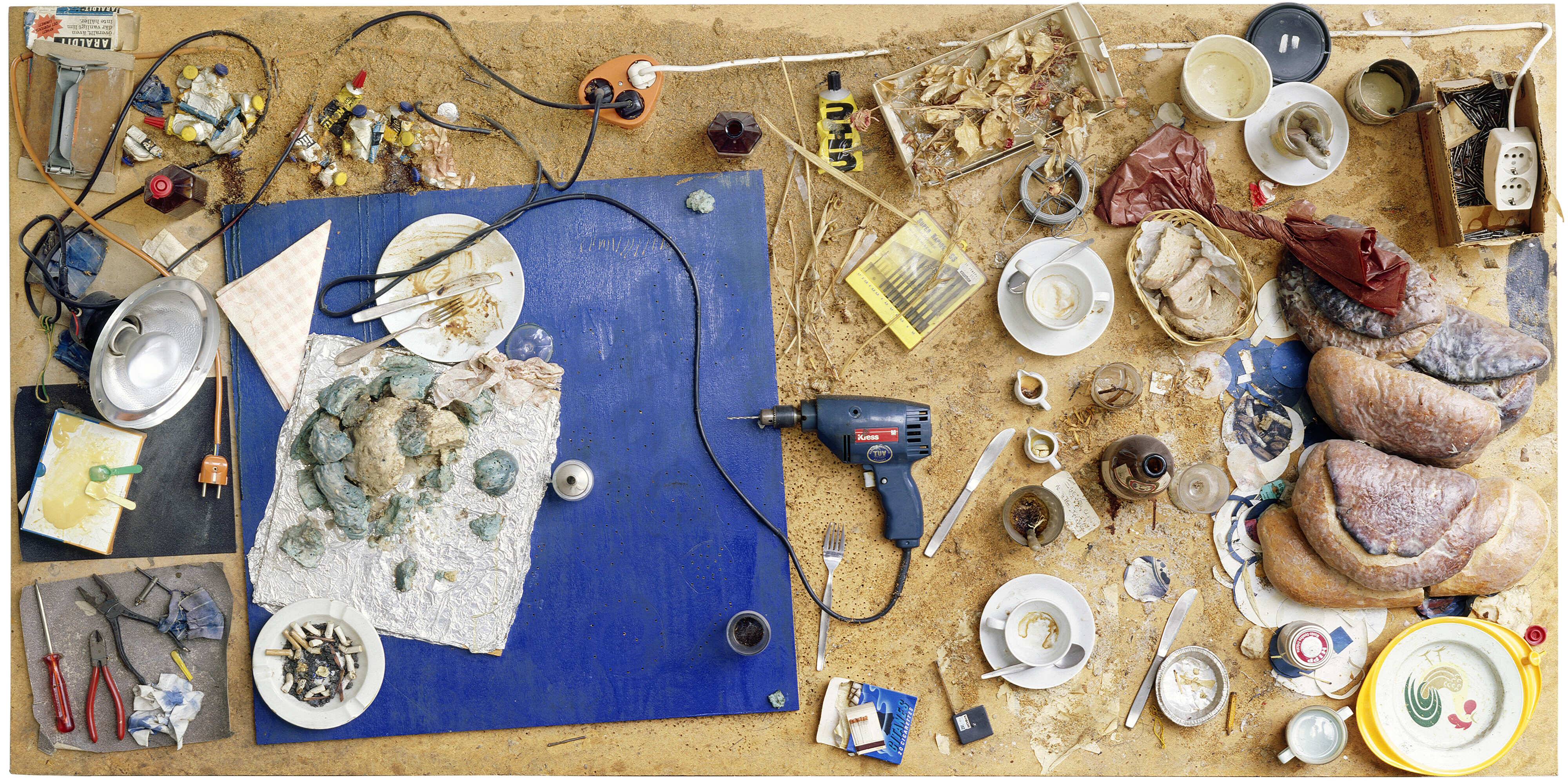
Daniel Spoerri, Fallenbild im Quadrat: Paraphrase auf die Aktion 365 Tische des Rest. Spoerri, 1972
In Switzerland, the land of perfection, Spoerri’s messy revelation of solitude and failed work sits underground and out of sight.
In the bowels of the recently built, multi-million-franc Kunsthaus Zürich extension, designed by David Chipperfield Architects and home to the controversial Emil Bührle Collection, lies a nine hundred square metre art depot, part of the museum’s back-of-house storage infrastructure. Entering these subterranean facilities feels like infiltrating the fictional CIA headquarters of a spy thriller. It was late October 2025 when I had the privilege of passing through various layers of security deep beneath the Zürich streets — somewhere under these same streets lies 8.5 billion francs’ worth of gold, stored by the Zürich Kantonalbank. I was here to view a curious work by the Swiss artist Daniel Spoerri (1930–2024), Fallenbild im Quadrat: Paraphrase auf die Aktion 365 Tische des Rest. Spoerri (1972). As the final door opened, I came face to face with the piece, precisely installed on colour-coordinated dollies, all positioned at the same angle for my private viewing pleasure. A tabletop chaotically covered in tools and foodstuffs, all glued down and intended to be hung on the wall.
Exclusive to the Magazine
Daniel Spoerri, Fallenbild im Quadrat: Paraphrase auf die Aktion 365 Tische des Rest. Spoerri, 1972 by Amelia Winata is featured in full in Issue 5 of Memo magazine.
Get your hands on the print edition through our online shop or save up to 20% and get free domestic shipping with a subscription.
Amelia Winata is an art historian and a founding editor of Memo Review. She is Curator at ACMI.