The Highest Form of Kitsch: “Political” Message Art
Under the veneer of progressive protest, today’s political art emerges as elite kitsch, commodified by galleries, donors, and biennial curators to signal liberal virtue in market-driven bohemia.

The museum director, gallerist, curator, and critic are elites of the professional class. Increasingly, so is the successful artist, with the art degree now a critical credential for success and recognition in this segment of the culture industry. Art world elites navigate a world of members only airport lounges, art fairs, galas, openings, and lavish private dinners. With their fluid and stylish self-presentations and identities, they have directed the contemporary global art world to adhere to a distinctly American ideal of liberalism and pseudoprogressive politics, protestations from Global South elites notwithstanding. American identitarian hegemony, the soft face of Empire, has produced the highest form of kitsch, promoted and desired by philanthropists and collectors and imposed on the rest of us. We need to unpack this condition if we are to challenge this pervasive form of debased art and its ideological outgrowths.
The intermediaries between artist and market are professionals with a certain
“expertise” who can successfully transform art objects and institutions into fetishes or desirable commodities recognisable to collectors as extraordinarily prestigious within the realm of liberal politics. New York’s Museum of Modern Art, a monument to the Cold War cultural front, symbolised American aspirations to import modernity from war-torn Europe and monopolise it. More recently, MoMA’s board secured its $400 million expansion with the help of Leon Black, billionaire founder of the asset management firm Apollo Global Management. Black had to step down as chair of MoMA’s board when it was reported that he had financial ties to Jeffrey Epstein, having, for “tax and estate advisory services,” paid Epstein $158 million.
Against a backdrop of powerful donors and obscenely wealthy collectors, today’s most prestigious galleries, institutions, and artists are almost all rhetorically and intentionally “political.” Art created by artists with “marginalised” identities is received as inherently and unquestionably progressive. The art world has become a vehicle for social and economic mobility for a tiny minority of working-class, impoverished individuals, primarily those of the “correct” origins and orientations. It enables
professional-class liberals to serve the interests of the donor class while signalling their commitment to “inclusion” without economic redistribution.
Historically, artists have been politically neutral or conservative. Clement Greenberg’s observation in his 1939 Partisan Review article “Avant-Garde and Kitsch” that the early twentieth-century avant-garde was “revolutionary” only because it emerged in revolutionary times seems apt: “Without the moral aid of revolutionary political attitudes, would they [artists] have had the courage to assert themselves as aggressively as they did against the prevailing standards of society?”
Contemporary artists occupy the space once held by shamans, mystics, court artists and musicians, and craft guild workers. For Greenberg, who—despite being dismissed by postmodernists—provided the best social definition of the late nineteenth and early twentieth-century avant-garde, these artists were “emigrants” into bohemia from bourgeois, market-based society. Today, “bohemia” is incorporated into bourgeois society: no facial piercings or outlandish hairstyles will shock donor and professional-class liberals.
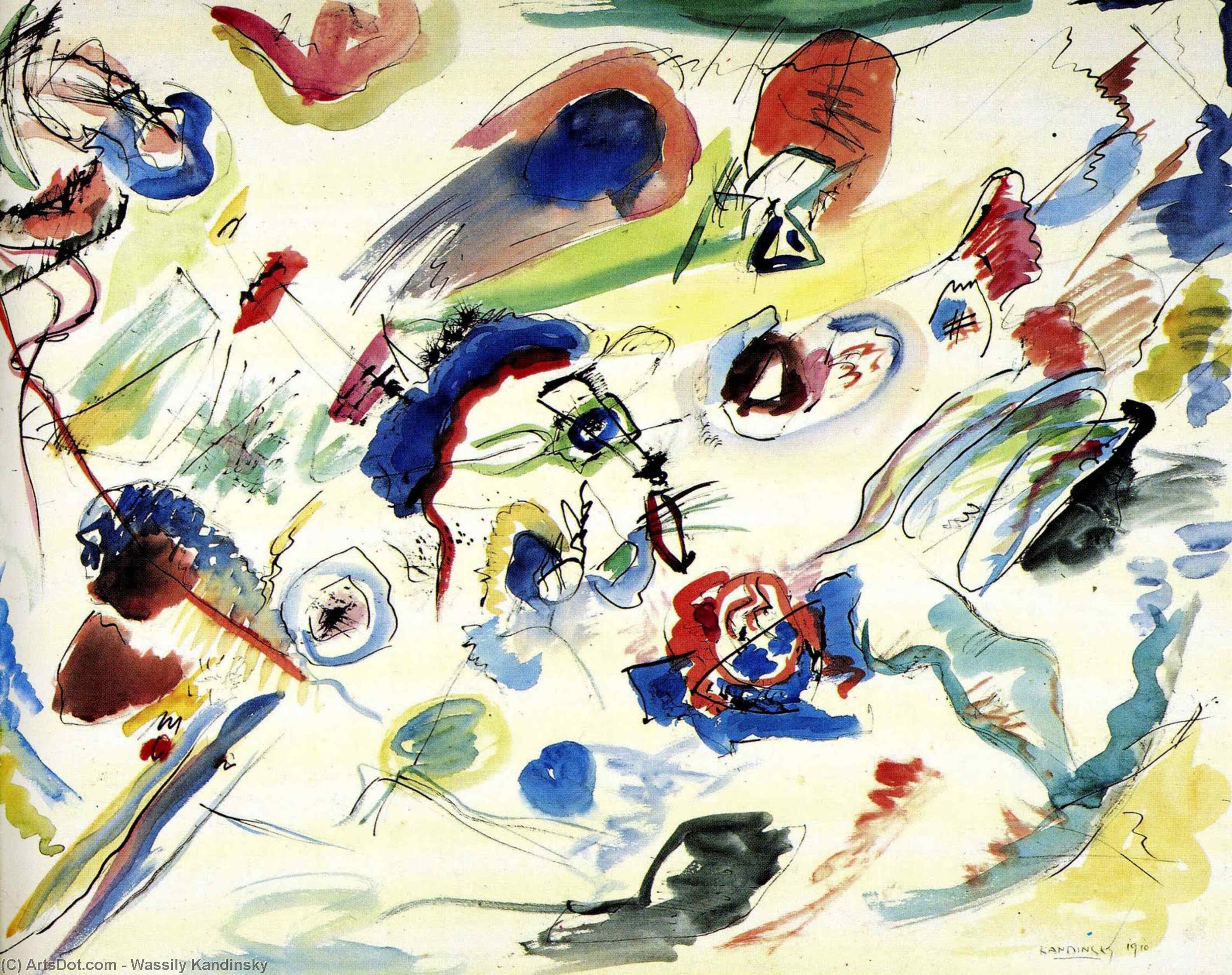
Bohemia is now fully market-oriented, with Etsy and Instagram promoting it as just one of many lifestyles. In Greenberg’s bohemia of refuseniks, artists strove not to represent the world or please an audience but to engage in what he called the imitation of imitating, becoming fully attuned to the demands of their work and its materials while confronting constraints originating not in common experience but in the medium itself. Although he was later condemned as a formalist, Greenberg found in the artist’s commitment to her process and medium an intensive critique of the commodity form. Art’s formal integrity provided a utopic horizon of craft, intention, and autonomy from the demands of markets and viewers. Formalism was ideologically revolutionary in that it travailed in service of an art that was autonomous and abstract, free from referential responsibilities. “Mondrian, Miro, Kandinsky, Brancusi, even Klee, Matisse, and Cézanne,” Greenberg explains, “derive their chief inspiration from the medium they work in.”
This historical avant-garde stood in opposition to “kitsch,” a term that has fallen out of favour due to a widespread fear among art world professionals of being labelled elitist. Kitsch, as defined by Greenberg, is a form of culture associated with urban working classes who, alienated from their ancestral folk culture, seek diversion and entertainment. Lacking substantial leisure time to appreciate high art, they gravitate towards readymade, debased forms of bourgeois culture. The irony of our times lies in the obdurate and proud philistinism of the contemporary bourgeosie: donors and collectors also lack time, as capitalists fear leisure as much as seventeenth-century Puritans did. “Kitsch, using the debased and academicized simulacra of genuine culture, welcomes and cultivates … insensibility. Kitsch is mechanical and operates by formulas. Kitsch is vicarious experience and faked sensations.” Our philistine elites would love political art.
Catherine Liu is Professor of Film and Media Studies at UC Irvine. She is the author of Virtue Hoarders: The Case Against the Professional Managerial Class. Her forthcoming book Traumatized is coming out with Verso.