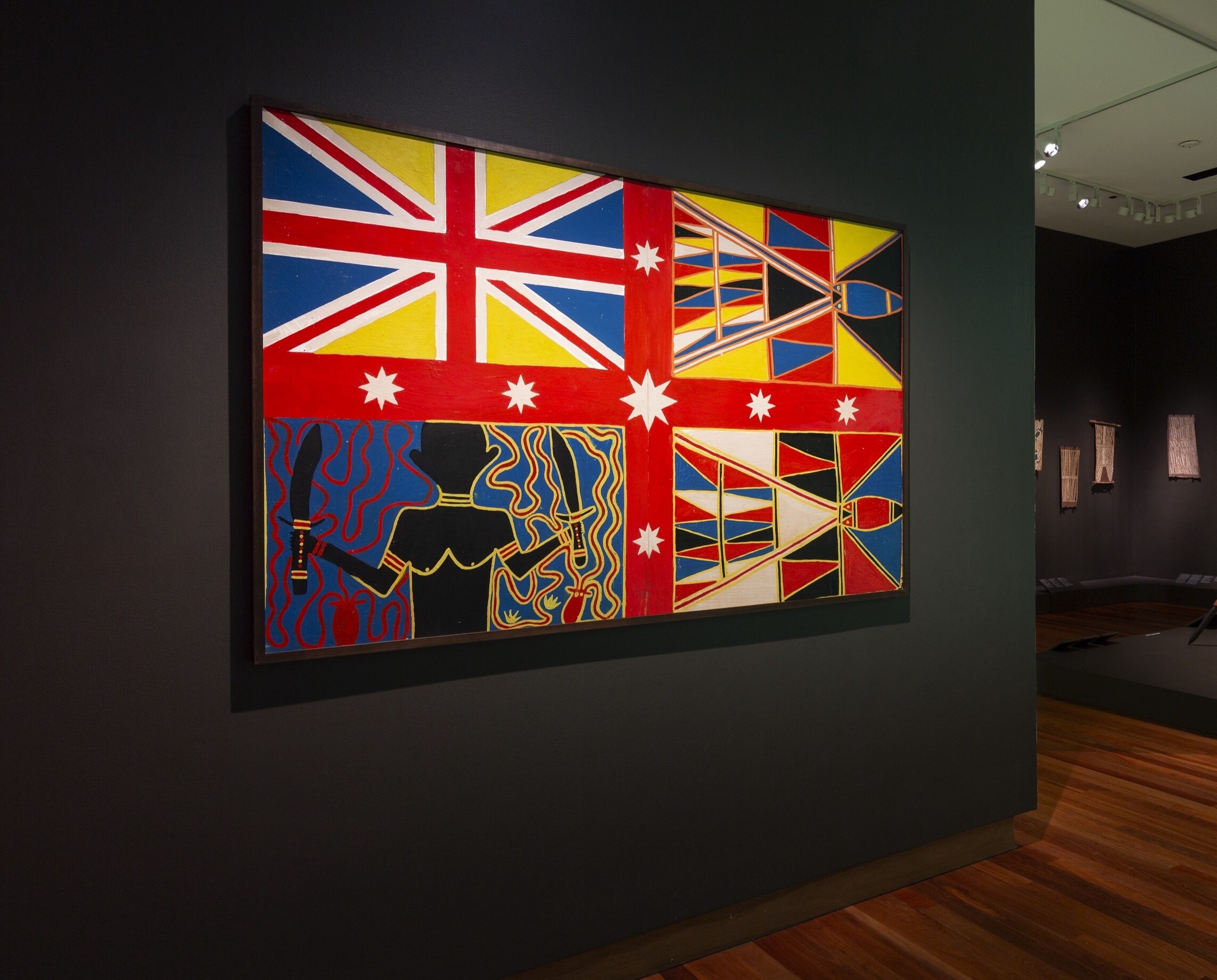
Liwukaŋ Bukurlatjpi, A New Australian Flag (1989)
“We can and must live together under one law under one flag.” — Burrumarra, 1989
Not one to miss the political opportunity of Australia’s 1988 bicentenary, in 1989 the Yolŋu buŋgawa (headman) of the Warramiri nation, Burrumarra (ca. 1917–94), sent a two-page proposal for a new Australian flag to Indigenous and government organisations (which I quote from). It included
illustrations of the flag taken from an enamel painting on plywood that Burrumarra asked his brother Liwukaŋ, a prominent bark painter, to do. Another brother, Wulanybuma, assisted. Most striking are the bright colours, pop-pastiche, mixed metaphors, and transcultural appropriations. Looking nothing like brand Yolŋu — that, for example, Liwukaŋ’s traditional ochre bark paintings exemplify — it is more postmodern, more like Gordon Bennett meets Constanze Zikos.
Exclusive to the Magazine
Liwukaŋ Bukurlatjpi, A New Australian Flag (1989) by Ian McLean is featured in full in Issue 4 of Memo magazine.
Get your hands on the print edition through our online shop or save up to 20% and get free domestic shipping with a subscription.
Professor Ian McLean is Hugh Ramsay Chair of Australian Art History at the Univeristy of Melbourne.