Kim Gordon’s Body Part 1: The Body
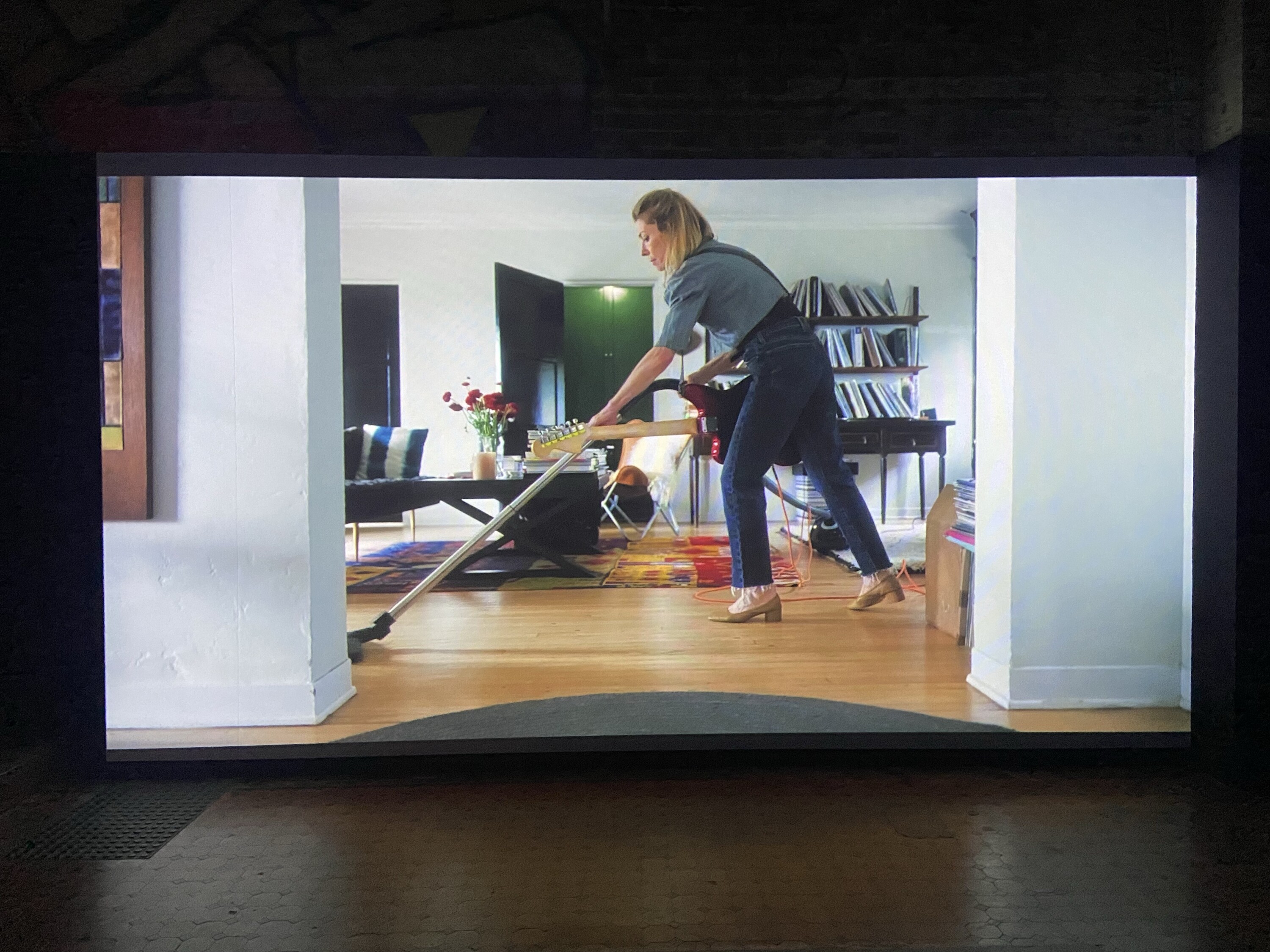
Kim Gordon’s rock-star body is an object of projection—vacuuming, sleeping, wielding a Jazzmaster in Airbnb limbo. From Sonic Youth to No Home Record, she performs middle-class blankness, but what’s staged, what’s real, and who’s the audience for her disembodied domestic rebellion?
Memo presents a sneak peek of issue 2 with the first part of Audrey Schmidt’s two-part article, “Kim Gordon’s Body.” Part 2 will appear in print, shipping late July. Preorder here.
Contemporary dance discourse can be boiled down to a rather rudimentary concept: “The Body.” It is the definite article that defines a discipline. The X Body (the virtual body, the performative body, the gendered body, the collective body); The Body as a site of Y (production, decolonisation, lived experience, difference, resistance); The Body as Z (subject-agent, object, document, archive, image, screen). Spice it up with a few other lexical mainstays like embodiment, disembodiment, bodies in space, corporeality, gesture, distantiation, mediation; or, for a little philosophical jazz, The Body without Organs. Whichever way you approach the equation, contemporary dance is tediously and unavoidably preoccupied with The Body.
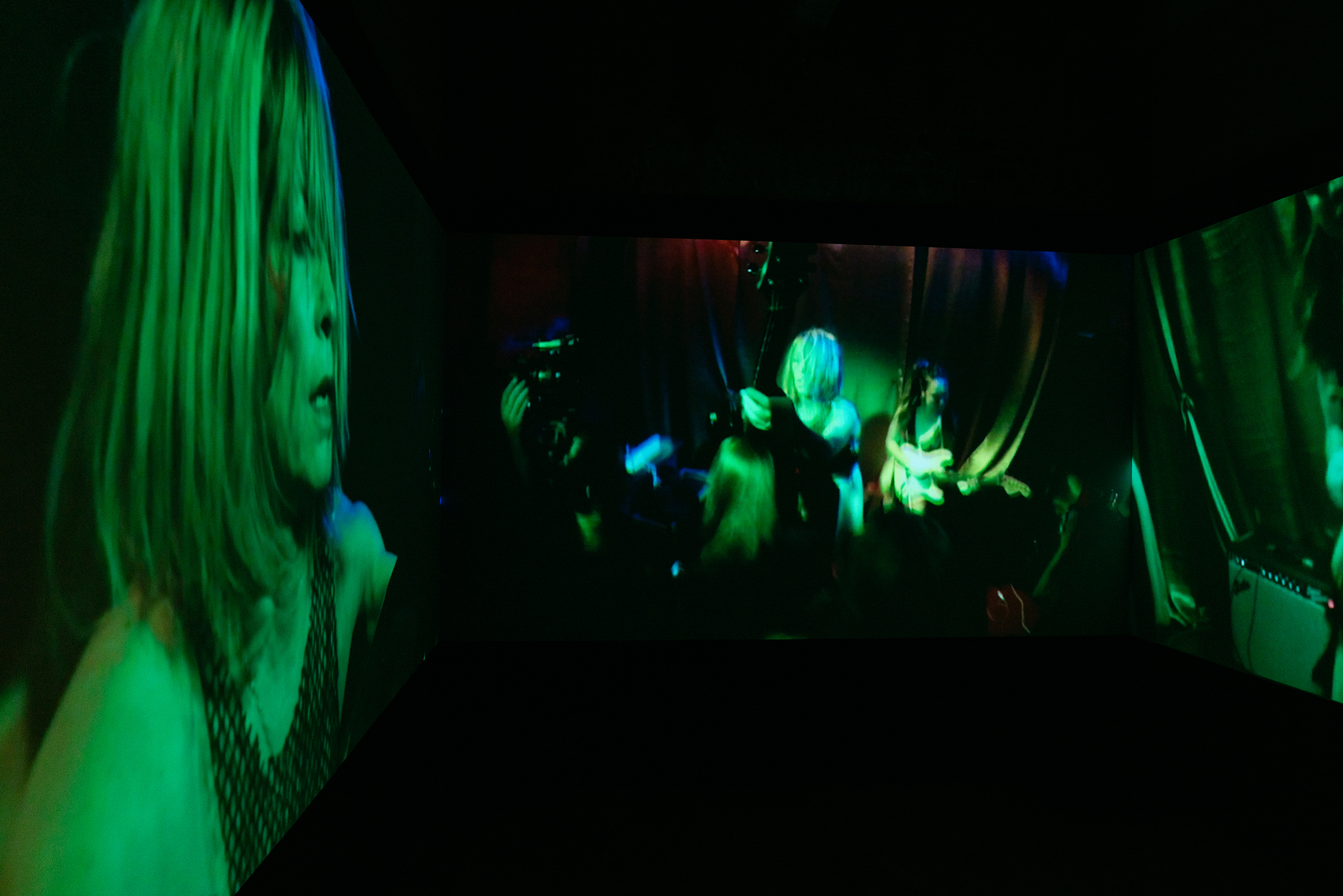
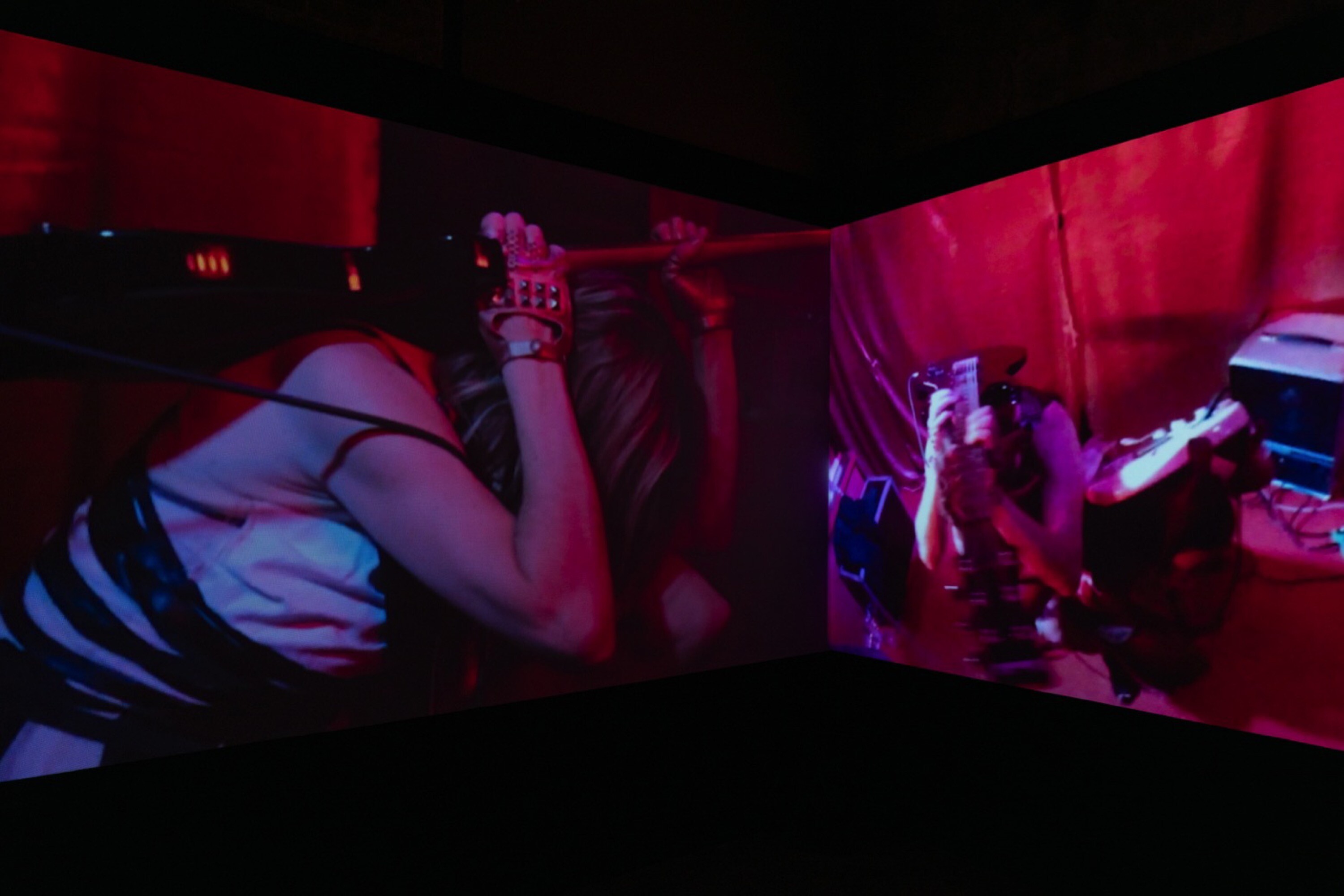
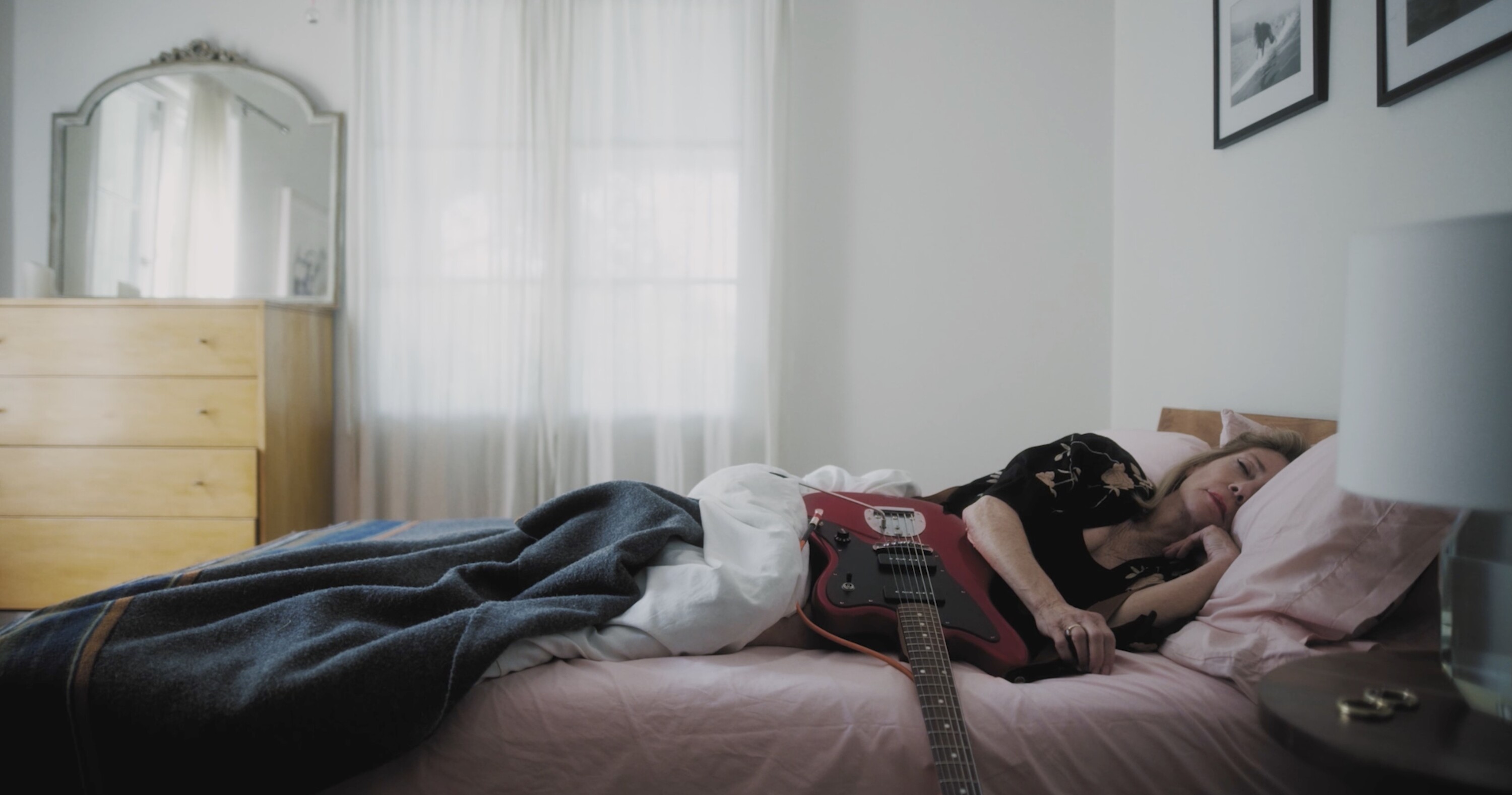
Kim Gordon’s survey Object of Projection at the Substation, is all about “the Body.” The media release gave prominence to a “special presentation” of Proposal for a Dance (2012), a triptych video installation featuring “two female performers wielding electric guitars and wearing Rodarte dresses.” The marketing copy describes their “experimental choreography” as “a gesture towards anti-pop ideals and their implications for the female body.” But the hero image recalls another familiar variable: The Celebrity Body. It is a still from Picture Window (2022), a video work made with Manuela Dalle, featuring Gordon “sleeping” with a Fender Jazzmaster (AKA “the hero of the underground”) draped across her body. She is lying on her side under a Swiss military wool blanket in a room with all the “neutral” and depersonalised signifiers of an Airbnb.
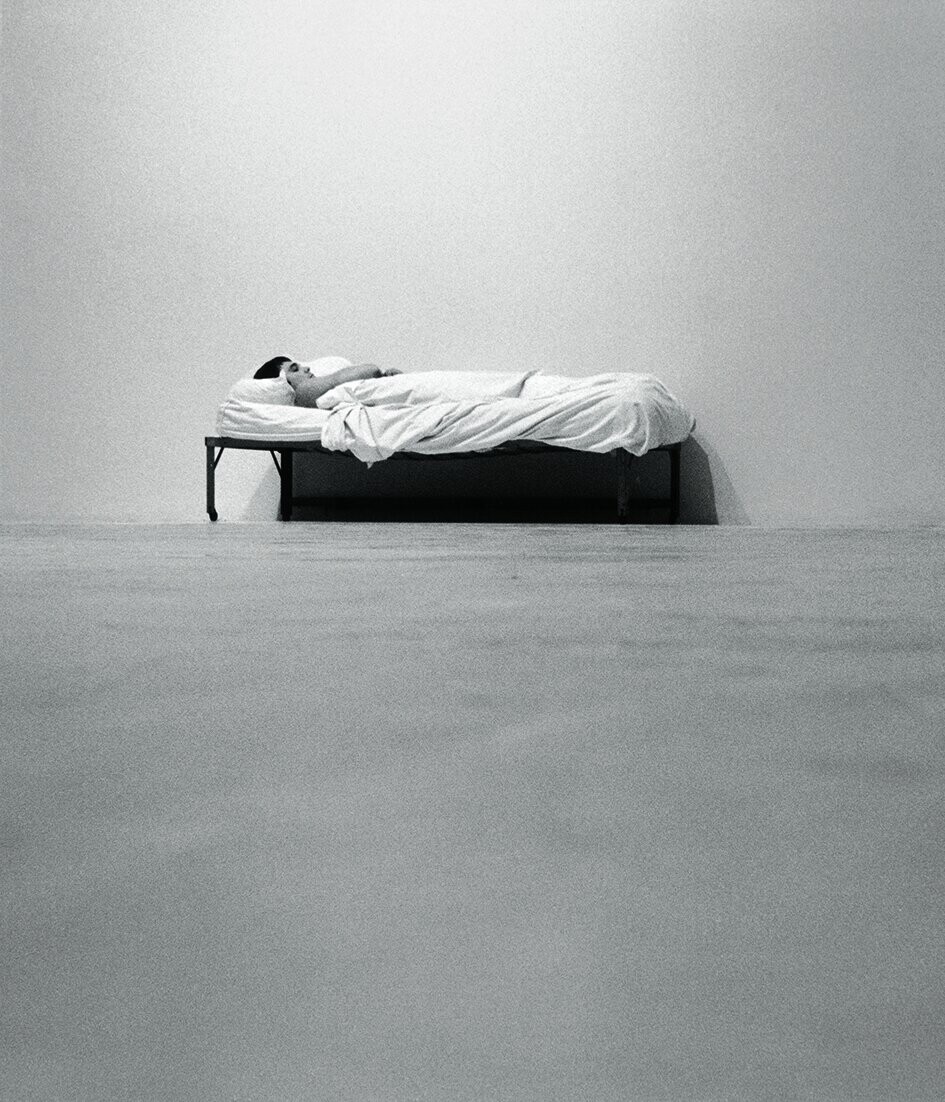
Gordon revisits here a figure of the sleeping artist that has been endlessly rehashed by artists since Chris Burden’s Bed Piece (1972): Susan Hiller’s Dream Mapping (1974), Bruce Gilchrist’s Divided by Resistance (1996), Marina Abramović’s The House with the Ocean View (2002), Emilia Telese’s Life of a Star and Sleepwalking (2005), Chajana denHarder’s Sleep (2012), Taras Polataiko’s Sleeping Beauty (2012), and Zhou Jie’s 36 Days (2014). These performances centre on the gap between the phenomenal (lived) and semiotic (interpreted) body by way of “problematising” the spectacle with the vulnerable non-performance of sleep.
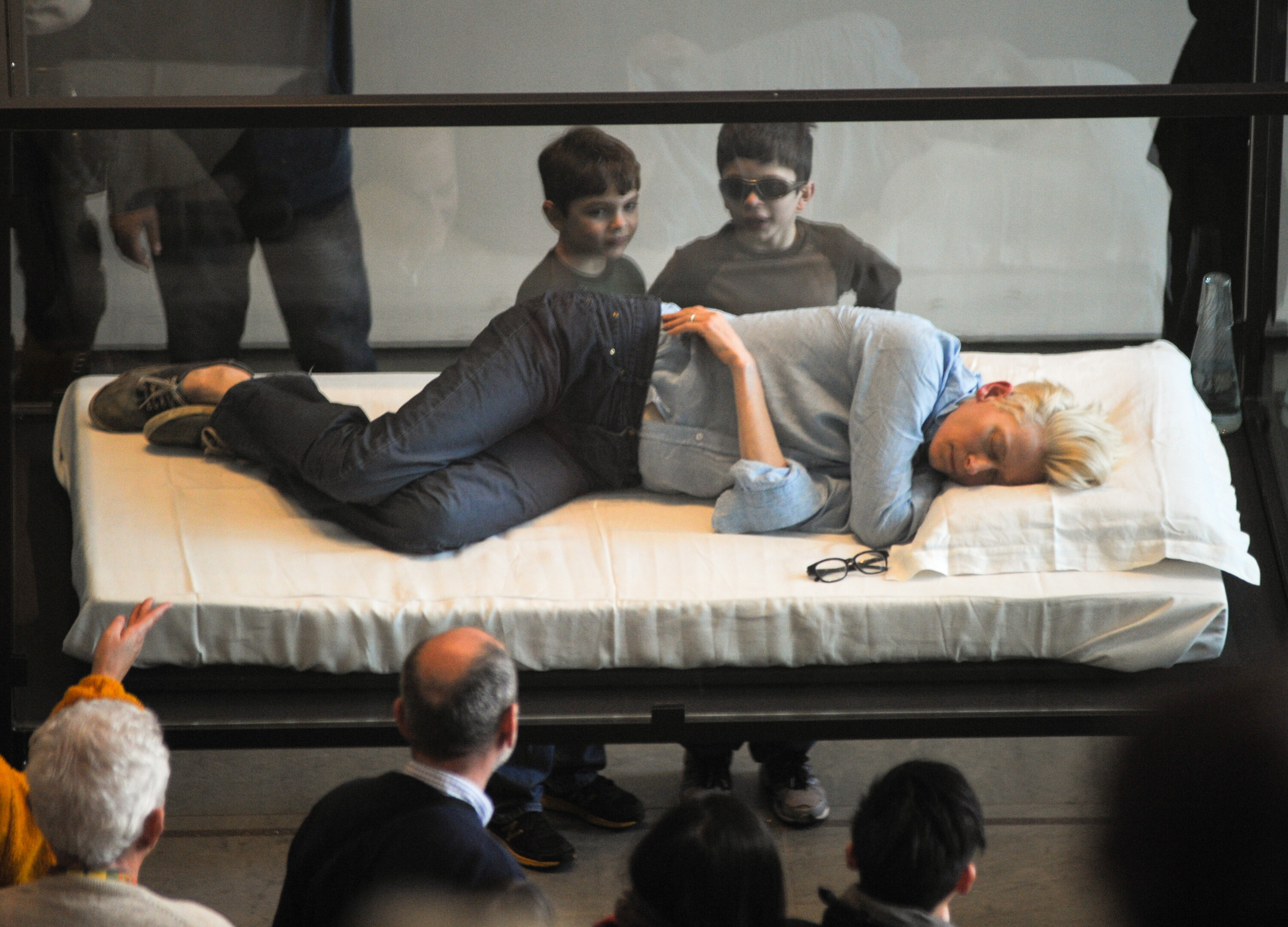
The trope is quite popular among celebrities whose semiotic bodies are the exemplary products for public consumption. Perhaps the most influential example of the sleeping celebrity is Tilda Swinton’s 1995 performance work at Serpentine Gallery in London, The Maybe. For seven days, eight hours a day, Swinton slept in a raised glass vitrine in the gallery with up to twenty-five-thousand voyeurs. She was exhibited alongside installations by renowned artist Cornelia Parker made up of celebrity memorabilia from London collections such as the half-smoked cigar of Winston Churchill, Queen Victoria’s stocking, and Napoleon’s rosary. In Lady Gaga’s 2012 Sleeping with Gaga, coinciding with the launch of her inky new perfume “Fame,” the pop star “slept” in a giant replica of her eau de parfum bottle, allowing partygoers to reach in and touch her hand. She closed the performance by posting iPad portraits on Instagram, getting a tattoo, and getting naked.
Gordon’s take on the “celebrity body as public object” was probably best expressed in her 1993 catalogue essay “Is It My Body?” written for Mike Kelley: Catholic Tastes at the Whitney Museum of Art. She writes about Kelley’s stuffed animal portraits Ahh … Youth!, one of which appeared on the cover of Sonic Youth’s Dirty album the year prior, likening them to rock stars — as “something to be projected upon.” She writes, “the body’s not theirs anymore, it’s a public domain and public perception.” The Rock Star Body is the Object of Projection.
Audrey Schmidt is a writer, senior editor of Memo Magazine and Melbourne Personality.